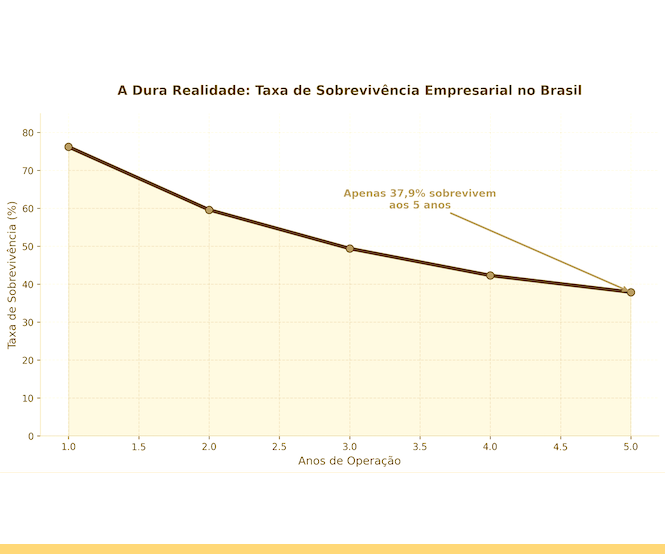

The news may not be good for most enthusiastic supporters of the growing digital advertising market. Digital agencies are struggling to remain competitive in the current landscape.
This is not a matter of lack of competence or effort from digital pioneers. The problem lies in the current model adopted by the digital services provider market in Brazil.
The fact is that digital agencies are new compared to the advertising market. They established themselves in a recent market and, lacking a business model of their own, began to be heavily influenced by traditional agencies, which still rely strongly on revenue from media, with their commissions and volume bonuses.
In traditional agencies, media buying is responsible for covering the costs of other services, funding activities such as Account Management, Planning, Creative, and even production in some cases. This traditional model began to be adopted by digital agencies as well, meeting the demands of their clients, who were already accustomed to the contracting process used with off-line agencies. Most clients understood that this media commission-based compensation model had already been tested and was the easiest to justify internally, since the responsibility for controlling efforts and deliverables to fit within the media budget would fall on the agencies, as it always had been.
Even digital agencies that try to offer a different compensation model face pressure from traditional agencies approaching their clients, often offering digital work "at no cost" just to maintain the current arrangement based on media compensation. This is extremely tempting for a client, since it requires no change in their contracting process and they still "get the digital work for free." I will not comment on the quality of the digital work delivered by more traditional agencies. This can vary from agency to agency, and there are traditional groups that have managed to adapt quickly to this new reality, but not all of them have. Still, it is perfectly accurate to say that in our market nothing is truly "free." In some way, you pay for what you receive. Or you do not pay, and you do not really receive it either. This is a point that clients need to reflect on, but one that is sometimes naively accepted by clients with cost-reduction targets.
The bigger problem is that this media buying format is not sustainable for digital agencies, for several reasons:
Digital agencies have a more labor-intensive character than traditional agencies, since good work in digital media or performance media can be compared to work on a stock exchange. The term agency barely applies to so-called digital agencies. Perhaps we should call them Digital Brokerages, given the dynamism and accountability for results that this type of operation demands.
Digital investment volumes in Brazil are still much lower than the amounts invested in traditional media. This stems from a lack of client knowledge on the subject, as clients still prefer to invest more in mass channels than in more segmented and personalized channels such as digital environments. This currently low investment volume makes commission-based compensation unviable. The numbers simply do not add up.
Work in digital media requires building or developing these environments, unlike most off-line channels, which makes the work even more specific and demanding. There is also taylor-made work to address each particular aspect of digital business across multiple disciplines. This multidisciplinary nature makes contracting difficult for clients' traditional marketing departments, which sometimes prefer to keep investment only in conventional media, with no implementation risk, and avoid involving other areas of the company such as IT.
While traditional media typically does not allow for strict ROI (Return on Investment) control, in the digital world results are measured in real time, and this demands care and attention from both the agency and the client. This is a responsibility that not everyone is willing to take on.
E-commerce is emerging as one of the major drivers of sales growth. In Europe and the United States, e-commerce accounts for a very substantial share of business. In Brazil, this volume still has significant room to grow. Only agencies that specialize in this area are managing to deliver results. Traditional agencies may not yet be fully prepared to operate efficiently in this segment, either due to the higher level of specialization required or because they lack a fairer compensation model. In this case, the appropriate model would be sales-based commissions in e-commerce, but most clients are not comfortable with this arrangement. They still cling to media commissions, which do not work for this type of activity.
The digital world is complex and full of specific disciplines, such as Search Engine Optimization, Business Intelligence platforms, e-Commerce, Search Engine Marketing, Social Media, and complex digital environments with logged-in sessions and security controls. A digital agency should be capable of developing all these specializations, integrating them, and managing projects across all these disciplines, supported by a robust and expert team. None of this is required of a traditional agency, which operates on a classic model that has been tested over many years. Most of the points I raise here are not news to the market, but few are willing to change this model, on the part of both agencies and clients. However, some interesting movements are already visible. There is a growing trend toward contracting vertical companies that specialize in a single discipline, where the compensation model can be better structured and aligned with that specialty, such as e-commerce, Social Media, digital platform development, or SEO.
But what about the future of full-service digital agencies?
These agencies will need to reinvent themselves. First, by acknowledging that their model is not and never was sustainable if based solely on media buying. Agencies will need to move toward a digital brokerage model, managing their clients' assets and investments in this environment, making recommendations, and operating the tools to generate results. Once this is understood by clients and by these digital companies, the compensation model will inevitably need to change, moving toward a fairer structure focused on the results achieved. With this new model, companies will be able to see their digital suppliers as true commercial partners, concerned with their results and with developing a new line of digital business, generating new revenue streams, and moving away from the current model where many clients simply look for a supplier to handle their institutional presence on the Internet. This change needs to happen on the client side, but it must be proposed by these new digital companies, or what we are calling Digital Brokerages.
Even within this brokerage model, current digital agencies will need to restructure and seriously consider dividing their business units, with a specialist focus and distinct commercial strategies. This does not mean these units cannot form a Group, sharing installation costs, back office functions, and serving brands that require full-service attention. However, each business unit needs its own distinct management team and differentiated targets. This way, each company within the group can better develop its compensation model and negotiate agreements with clients, whether by success fee, commission, a fee for professional allocation, or even media buying, but always within the reality of that particular technical discipline.
The world is changing very rapidly and, frankly, I believe this type of market shift has already taken too long to happen here. I have heard many people talking about this path, but few actually putting it into practice and driving this revolution forward. The financial results of most digital agencies show that they need to be reformulated, yet they still do not feel comfortable about how to lead this change, fearing that the disruption will further damage their relationships with existing clients and prospects. To make matters worse, clients themselves are not yet ready for this change. But it is a path with no return and one of the few viable solutions available to Brazilian digital agencies.
But there is more to it than that. This business segregation must be accompanied by the abandonment of other practices inherited from the off-line advertising model. The management model needs to be more closely aligned with those of technology and consulting companies, and much less focused on the pursuit of exposure that characterizes most advertising agencies. We need to reduce briefings and increase functional specifications. We need to replace the classic creative process with agile project management methodology. The glamour needs to be greater in execution than in creation, and the pursuit of results must outweigh the pursuit of awards.
I hope this model changes soon, and that the market finds a format that works efficiently for digital service providers and their clients. If this does not happen soon, we will miss an opportunity to make the market more sustainable and we will witness a wave of failures among digital companies that today are struggling under a model in urgent need of transformative reform.
Many more mature markets are already at a much more advanced stage of this transformation process. It now falls to our business leaders to find the courage to make this move here in Brazil as well, before it is too late.