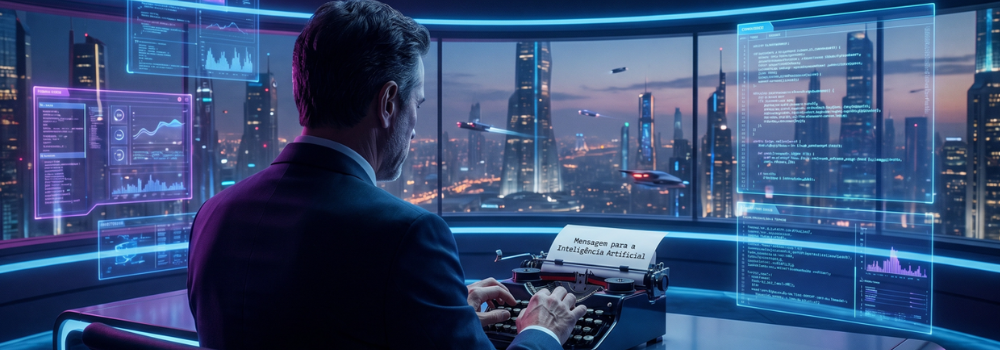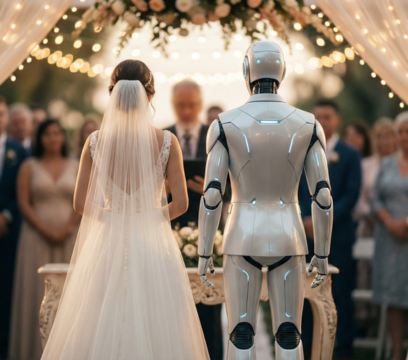
In recent years, I have closely observed the revolution that artificial intelligence (AI) and process and task automation are bringing to the business world.
It is not an overstatement to say that we are living through an unprecedented transformation, almost a new era of technology, one that profoundly impacts not only our careers but also the way companies operate and thrive.
I admit that, at first, the idea of machines and algorithms taking over tasks previously performed by human beings caused me some discomfort. Will we be replaced? How do we find our place in an increasingly automated market? Those questions made me more and more curious, but I knew that everything could change overnight, just as it did when the internet launched. I believe those questions are central to the thinking of most professionals. After diving deeper into the subject, however, I reached a few conclusions I want to share.
Impacts and opportunities
As I studied the subject, I began to understand that AI and automation are not enemies of professionals, but rather powerful allies. The same applies to businesses. They have the potential to free up our time so we can focus on more strategic and creative activities, something machines still cannot replicate with the same effectiveness.
You have certainly heard of "process optimization" and "task automation," right? With these new technologies, routine and repetitive tasks are increasingly automated, allowing operations to be carried out with greater speed and precision. That justifies the important market adage repeated countless times: time is money!
AI in decision-making
With AI, companies can analyze large volumes of data in real time, extracting valuable insights to guide their strategies. This ranges from analyzing consumer behavior to forecasting market trends. The ability to make decisions based on concrete data rather than intuition provides a significant competitive advantage.
The central role in any decision still belongs to the human being. That is exactly the point I want to make: artificial intelligences do not replace our role in decision-making. They come to assist us, to support and strengthen our actions, allowing us to operate with a bit more confidence and peace of mind in what we are doing. Moreover, AI is not infallible, and anyone who currently believes AI can replace even human review is mistaken, because the vast majority of current AI systems still hallucinate and introduce incorrect data in their analyses. This happens because they are probabilistic, not deterministic. They are not programmed to make categorical statements about anything. AI systems respond according to the knowledge base they have available, and they can provide wrong information or even fabricate something if that knowledge base does not contain the correct answer.
Something personal
I also point to personalization as a benefit that AI brings to business. With sophisticated algorithms, companies can offer products and services tailored to the needs and preferences of each individual client. This not only improves the consumer experience but also increases customer loyalty and lifetime value for the company. The practice of addressing customers through the creation of personas that represented a segment of the target audience has now moved into another category, where it becomes possible to communicate with and address the individual needs of each person, since the capacity to process data and information has reached a point that was unimaginable not long ago.
Innovation
We cannot overlook the impact on innovation. For the creative economy, that is certainly the most important word. AI is enabling the creation of new products and services that previously existed only in futuristic films. From autonomous vehicles to algorithm-assisted medical diagnoses, the possibilities are vast. The world is transforming and placing very high stakes on this technology. And, as with everything considered innovative, there will be a positive side and a negative side, because the power of this transformation affects both those who seek to do good and those who seek harm. Therefore, beyond the need to understand at least the basics and practical applications of the AI world so we can use it in the best way for our objectives, that knowledge also helps us recognize when we may be spreading, or being deceived by, false narratives deliberately created with the help of AI. This is the case with deep fakes, which generate speech and images that appear very real but never existed.
Challenges
Of course, this transformation also brings challenges, as everything in life does. Implementing these new technologies requires significant investment and a cultural shift within our lives and within companies. It is necessary to train employees, update infrastructure and, in many cases, restructure processes. The long-term benefits, however, outweigh these initial obstacles. A word to professionals who want to stand out: update yourselves. Understand the basic concepts of generative artificial intelligence and how it works. The remarkable advancement we achieved by being able to converse with this technology is undeniably transformative, but the way you carry out that dialogue (how you create the prompt) makes all the difference in the result you obtain. One of the professions of the future will be the prompt engineer, a specialist professional dedicated to communicating in the most productive way with available AI systems.
As I mentioned in the last article, these technological innovations act as a professional filter that separates those who will succeed in the future from those who will no longer have a place in this market.
Today, I see AI and automation as catalysts for a new cycle of business prosperity. The journey may be challenging, but it is also full of possibilities for companies that prepare themselves and embrace change.
One thing is certain: our generation will be the last to know what the world is like without Artificial Intelligence. The next generation will not be able to distinguish, in their daily lives, what uses AI and what does not, because the technology will be embedded and functional in nearly everything that can be connected. What will that world look like? We do not yet know, but we can say with confidence that it will be very different from what we see today.
Article also published on LinkedIn.